analytical
what "99% purity" actually means on a coa
what a 99% purity figure on a peptide coa really measures, why it is not the same as how much peptide is in the vial, and what to check alongside it.
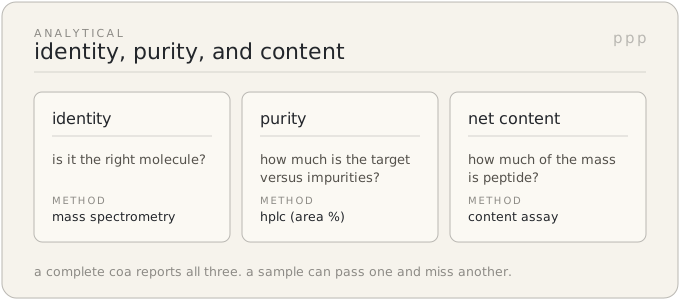
"99% purity" on a peptide Certificate of Analysis means that, by HPLC at a given wavelength, 99% of the detected material is the target peptide and 1% is other detected components. It is a relative measurement of one thing against another. It is not a statement of how much peptide is in the vial. That distinction is the single most misread fact in the category, and it is worth getting exactly right.
the precise meaning of the number
Purity comes from high-performance liquid chromatography. The instrument separates the sample into its components, measures the area under each peak, and reports the target peptide's peak as a percentage of the total peak area. "99%" means the main peak is 99% of the detected signal.
So the number answers a specific, narrow question: of the organic components the detector can see, what fraction is the intended peptide? That is genuinely useful. It tells you the synthesis produced few related-substance impurities. But three things it is not are where researchers get tripped up.
what 99% purity does NOT mean
It does not mean the vial is 99% peptide by weight. This is the big one. A lyophilized peptide is not pure peptide powder. It also contains water it has absorbed and counter-ions (salts such as acetate or trifluoroacetate) bound to the peptide from synthesis and purification. HPLC purity ignores all of that, because it measures the peptide against other organic peaks, not against water and salt. The fraction of the total dry mass that is actually peptide is a different measurement called net peptide content, and it is typically lower than the purity figure.
It does not confirm identity. A batch can be 99% pure and be the wrong peptide, if the synthesis cleanly produced an incorrect sequence. Confirming the molecule is the right one requires mass spectrometry. See LC-MS and peptide identity confirmation.
It says nothing about endotoxin or sterility. Those are separate contamination tests. A pure peptide can still carry endotoxin or fail sterility, because purity is a chemical measure, not a microbiological one.
the illustration that makes it click
Consider two vials, both labeled "10 mg" and both reporting 99% purity by HPLC:
| Vial A | Vial B | |
|---|---|---|
| HPLC purity | 99% | 99% |
| Net peptide content | 92% | 78% |
| Actual peptide mass in a "10 mg" vial | ~9.2 mg | ~7.8 mg |
| Counter-ion + water fraction | ~8% | ~22% |
Both are "99% pure," and both are honestly labeled on that metric. But the actual amount of peptide differs by well over a milligram, because their net content differs. A researcher calculating a concentration from the label alone, trusting the purity figure as if it were content, would be working from the wrong number in Vial B. This is why net peptide content matters as much as purity, and why the strongest COAs report both.
how to read "99%" responsibly
The figure is meaningful when you read it for what it is and ask for what it omits:
- Check the method and wavelength. "99% by RP-HPLC at 214 nm" is a real, evaluable claim. A bare "99%+" with no method behind it is marketing, not data.
- Look for net peptide content. If content is not reported, the purity figure alone does not tell you how much peptide you have.
- Look for an identity result. Purity plus a mass-spectrometry identity match is the pairing that actually establishes "the right compound, and it is clean."
- Confirm it is batch-specific. The purity figure should belong to the exact lot in your hand, not a generic product-line sample.
Read this way, purity is a valuable data point in a fuller picture. Read as a standalone grade, it flatters the material and misleads the calculation. The pillar guide, reading a Certificate of Analysis, walks through how purity sits alongside every other parameter.
frequently asked questions
Is 99% purity good for a research peptide?
A 99% HPLC purity figure indicates a clean synthesis with few related-substance impurities, which is generally considered a high-specification result for research-grade material. What "good" means still depends on the research application and on the other parameters (identity, net content, endotoxin) read alongside it.
Does 99% purity mean the vial is 99% peptide?
No. Purity is the proportion of the target peptide among detected organic components by HPLC. How much of the vial's dry mass is actually peptide, versus water and counter-ion salts, is net peptide content, which is usually lower than the purity figure.
What is the difference between purity and net peptide content?
Purity (HPLC) measures the target peptide against other organic impurities. Net peptide content (typically gravimetric or amino acid analysis) measures the mass of peptide against the total mass of the vial, including water and salts. Both are needed for an accurate picture.
Can a 99% pure peptide be the wrong compound?
Yes. Purity does not confirm identity. A synthesis can cleanly produce an incorrect sequence that reads as high purity. Mass spectrometry confirms the molecule is the intended one.
references
- U.S. Pharmacopeia, General Chapter <621> Chromatography. https://www.usp.org/
- U.S. Pharmacopeia, General Chapter <1058> Analytical Instrument Qualification. https://www.usp.org/
- International Council for Harmonisation, Q6A Specifications: Test Procedures and Acceptance Criteria for New Drug Substances. https://www.ich.org/
continue reading
research use only. sold for in-vitro laboratory research.
not for human or animal use.